
Stretch marks during pregnancy: can they be prevented, and what should you do if they appear?
Updated: 7 days ago

Pregnancy is accompanied by significant changes to the body and skin. One of the most common changes is stretch marks — red, purple, pink, brownish or, later on, whitish linear streaks on the stomach, breasts, thighs and buttocks.
In medical terms, stretch marks are known as striae, whilst those that appear during pregnancy are called striae gravidarum, or pregnancy stretch marks.
Many women start using oils and special creams from the very first months of pregnancy, hoping to completely prevent stretch marks from appearing. However, scientific evidence suggests that the effectiveness of cosmetic products is considerably more limited than the adverts promise.
In this article, I will explain what is actually known about preventing stretch marks, which recommendations are backed by scientific evidence, and when it is best to start treating stretch marks that have already appeared.
What are stretch marks?
Stretch marks do not form solely as a result of a mechanical ‘tear’ in excessively stretched skin.
They are a complex change in the dermis — the deep layer of the skin containing collagen and elastic fibres.
During pregnancy, several factors come into play simultaneously:
a rapid increase in the size of the abdomen and breasts
hormonal changes
changes in the activity of fibroblasts — the cells that produce collagen
genetically determined properties of connective tissue
the skin’s individual response to stretching
In the early stages, stretch marks usually have a red, pink or purple hue. They are known as striae rubrae, meaning ‘red stretch marks’. Over time, the vascular component diminishes, the stretch marks fade, becoming whitish and slightly atrophic. These are mature stretch marks — striae albae.
Stretch marks do not pose a health risk, but they can have a significant impact on body image and quality of life.
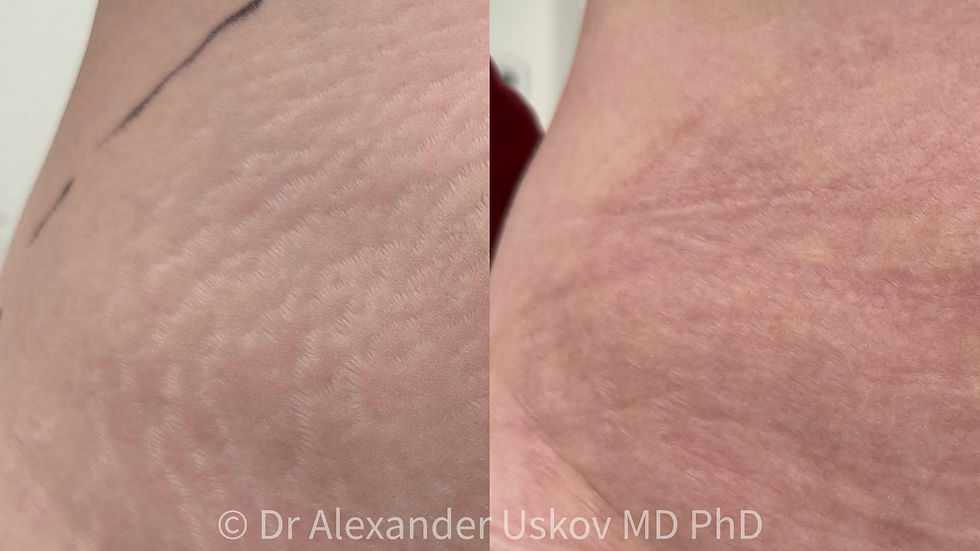
How often do stretch marks appear during pregnancy?
According to various studies, stretch marks appear in approximately half or more of pregnant women. The exact prevalence varies considerably between studies, as it is influenced by age, heredity, skin characteristics, ethnic origin, body weight and the methods used to assess stretch marks.
They usually become noticeable in the second and, in particular, the third trimester, when the abdomen grows at its fastest rate.
Who is more at risk of developing stretch marks?
The following risk factors have been identified most consistently in studies:
Young age
Stretch marks are more common in young women during pregnancy. One possible explanation is that younger skin is tighter and reacts differently to rapid stretching.
Genetic predisposition
If the mother or a sister had pronounced stretch marks, or if the woman herself developed them during her teenage years, the risk of them forming during pregnancy is higher.
This confirms the important role played by the genetically determined structure of connective tissue.
Significant or rapid weight gain
The risk of stretch marks is linked not only to final body weight, but also to the rate at which it changes. The faster the abdominal circumference increases and the greater the strain on the dermis, the higher the likelihood of stretch marks forming.
Observational studies show a link between stretch marks, weight gain during pregnancy, an increase in body mass index, abdominal circumference and the height of the fundus of the uterus. However, this does not mean that restricting food intake is guaranteed to prevent stretch marks.
High fetal weight and multiple pregnancies
A larger fetus, polyhydramnios and multiple pregnancies can increase the mechanical strain on the abdominal skin.
Stretch marks before pregnancy
The presence of stretch marks on the thighs, buttocks or breasts, which appeared during puberty or as a result of weight changes, indicates an individual’s skin’s predisposition to developing them.
Heredity and age cannot be changed. Developing stretch marks does not mean you have taken poor care of your skin.
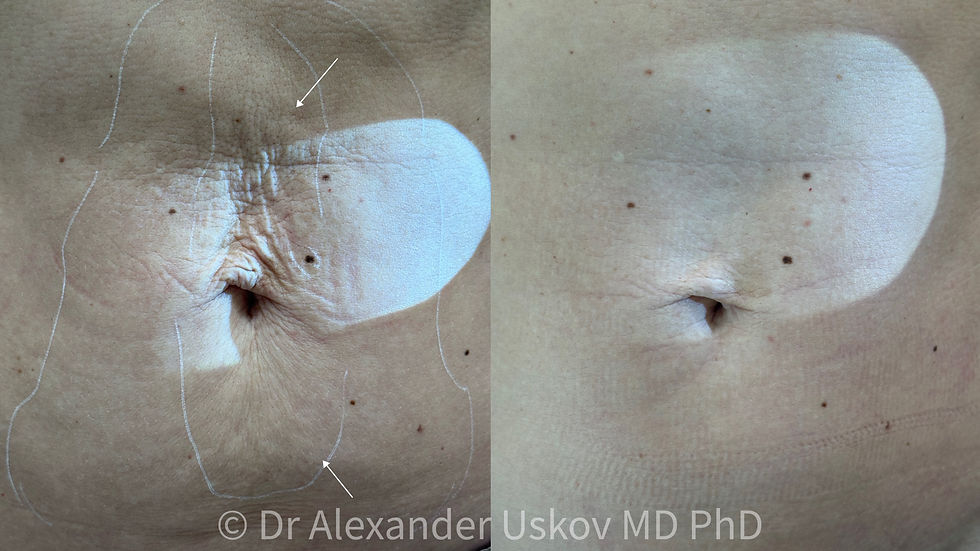
Is it possible to prevent stretch marks entirely?
To date, there is no method that is guaranteed to prevent the appearance of stretch marks in pregnant women.
A Cochrane review of six trials involving 800 women found no high-quality evidence that creams or oils prevent stretch marks during pregnancy. This does not rule out their usefulness for moisturising the skin. Brennan et al., Cochrane, 2012
Consequently, it is more accurate to speak not of guaranteed prevention, but of sensibly reducing potentially manageable risk factors and maintaining skin comfort.
Do creams, oils and stretch mark treatments actually work?
Cocoa butter
Cocoa butter is traditionally an ingredient in many products for pregnant women. However, in a double-blind, randomised trial, a cream containing cocoa butter did not demonstrate a statistically significant preventive effect compared with a placebo.
Therefore, cocoa butter can be used as a moisturiser if it feels pleasant on the skin, but one should not expect it to prevent the formation of stretch marks.
Olive oil
The results of studies on olive oil are mixed. Some small-scale studies have reported a reduction in the severity of stretch marks; however, higher-quality studies have not confirmed a significant reduction in their incidence.
Olive oil may be used if it is well tolerated, but it has not been proven to prevent stretch marks.
Almond oil
There are some studies in which massage with almond oil was associated with a lower incidence of stretch marks. However, it is not possible to determine with certainty whether the effect was due to the oil itself, the massage, the characteristics of the participants or the study methodology.
Furthermore, natural oils can cause contact allergies. If you have a nut allergy, you should discuss the use of almond oil with your doctor.
Coconut oil and other vegetable oils
In recent years, a number of small-scale studies on various oils have been published. Some of these suggest a potential benefit; however, the results are not yet sufficiently reproducible, and the quality of the evidence remains low.
Therefore, isolated positive studies do not provide sufficient grounds to claim that a particular oil prevents stretch marks in the majority of women.
Products containing Centella asiatica
Centella asiatica extract has been studied as part of several combination products. Individual studies have shown a reduction in the frequency or severity of stretch marks, but the formulations of the products varied considerably, and there are few high-quality studies.
Centella asiatica can be considered a promising ingredient, but one that has not yet been conclusively proven.
Hyaluronic acid
There is limited evidence suggesting that some products containing hyaluronic acid may have a preventative effect. However, this does not apply to all cosmetics containing hyaluronic acid, nor does it guarantee protection.
Hyaluronic acid effectively moisturises the skin’s surface, but stretch marks form mainly in the dermis, where ordinary cosmetic products hardly penetrate at all.
Vitamin E
Despite its widespread use, there is no conclusive evidence that vitamin E prevents stretch marks.
Furthermore, topical products containing vitamin E can cause contact dermatitis. Taking vitamin E orally in high doses without a doctor’s advice is also not recommended.
Collagen creams and dietary supplements
When applied to the skin, collagen does not penetrate the dermis in the form of intact fibres and cannot directly ‘restore’ the skin’s collagen matrix.
There is no reliable evidence that collagen-based dietary supplements prevent stretch marks in pregnant women. During pregnancy, any supplements should be discussed with your obstetrician or GP.
Why use a moisturising cream, then?
Moisturisers can be beneficial, even if they do not prevent stretch marks.
They can reduce dryness, alleviate the feeling of tightness, reduce itching, support the skin’s protective barrier or just make your daily skincare routine more comfortable
Therefore, a neutral moisturising cream free from irritating ingredients is a sensible part of a skincare routine, but it should be seen as a means of ensuring the skin’s comfort rather than a guaranteed cure.
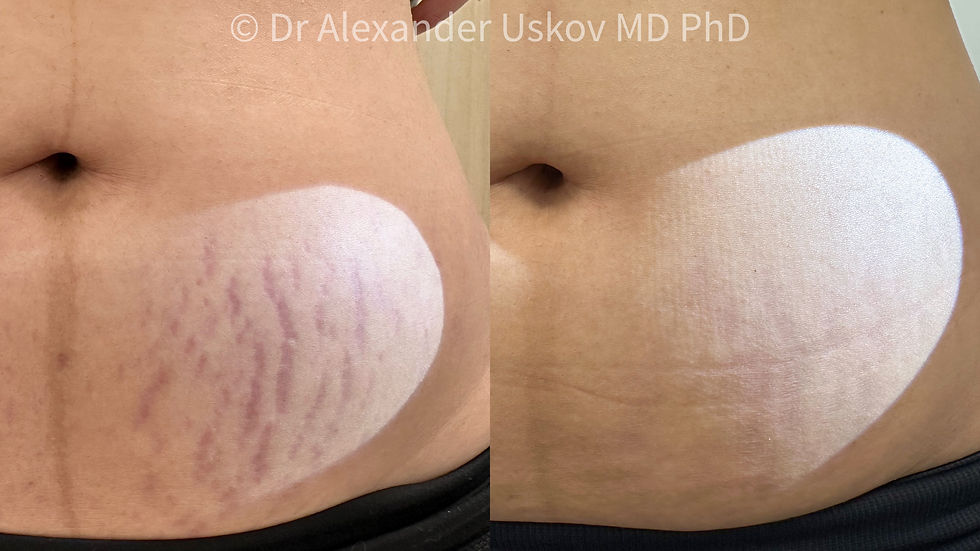
Dr Uskov’s advice on preventing stretch marks during pregnancy
1. Monitor your weight gain in consultation with your obstetrician
Excessive weight gain, and particularly rapid weight gain, is associated with an increased risk of developing stretch marks. However, pregnancy is not the time for strict diets or attempting to lose weight on your own.
The aim is not to gain as little weight as possible, but to ensure that weight gain remains within a physiological range appropriate to your pre-pregnancy body mass index, the course of your pregnancy and your baby’s development.
Recommendations on weight gain should be determined by your obstetrician. International guidelines are based on pre-pregnancy body mass index and are designed primarily for the health of the mother and baby, not solely to prevent stretch marks.
You should not restrict your diet for the sake of preventing stretch marks.
2. Avoid sudden fluctuations in weight
The skin adapts better to gradual changes in volume than to rapid stretching.
After giving birth, you should also not aim to lose weight as quickly as possible. A gradual return to your usual body weight is preferable for both your general health and the condition of your skin.
3. Moisturise your skin regularly
Apply a simple moisturiser once or twice a day to your stomach, chest, thighs and buttocks.
Ideally, choose a product that is:
free from retinoids
free from strong fragrances
free from large amounts of essential oils
free from irritating acids
well-tolerated by your skin
Products containing glycerine, ceramides, squalane, hyaluronic acid, panthenol or neutral emollients are suitable.
There is no need to buy an expensive product labelled ‘for stretch marks’. The cost of a product does not determine its effectiveness in preventing stretch marks.
4. Gentle massage may be used
Light self-massage whilst applying cream is acceptable provided the pregnancy is progressing normally and your midwife has not advised against applying pressure to the abdomen.
Massage can improve your sense of comfort and helps ensure you apply moisturiser regularly. However, its ability to prevent stretch marks has not been conclusively proven.
Massage should not be painful or vigorous.
5. Ensure you have a balanced diet
A lack of protein, vitamins and minerals can have a negative effect on the overall condition of the skin, but taking specific vitamins or supplements has not been shown to prevent stretch marks.
Your diet during pregnancy should contain sufficient amounts of:
protein
fruit and vegetables
sources of vitamin C
essential fatty acids
iron and other trace elements as recommended by your doctor
You should not take high doses of vitamins A or E on your own.
6. Maintain a healthy fluid intake
Adequate fluid intake is important for general health during pregnancy and for reducing dry skin.
However, there is no conclusive evidence that drinking more water than is physiologically necessary prevents stretch marks.
Your fluid intake should follow your obstetrician’s advice, particularly if you have oedema, kidney or heart conditions, or pregnancy complications.
7. Do not smoke
Smoking impairs microcirculation, collagen synthesis and tissue healing. Giving up smoking is important first and foremost for the health of the mother and baby, and also helps to maintain healthy skin.
8. Protect your skin from the sun
Ultraviolet (UV) rays do not cause stretch marks, but a tan can accentuate the visual contrast between healthy skin and white stretch marks.
Use a sunscreen with SPF 30–50 on exposed areas of skin. Fresh, red stretch marks should also be protected from intense UV rays to reduce the risk of uneven pigmentation.
Which products should not be used during pregnancy?
Retinoids
Topical tretinoin and other retinoids may help some early stretch marks in people who are not pregnant. They must not be used during pregnancy.
The European Medicines Agency recommends against the use of topical retinoids during pregnancy and when planning a pregnancy, despite low systemic absorption, as the risk to the foetus cannot be completely ruled out.
Examples of retinoids and vitamin A derivatives to avoid during pregnancy
tretinoin
retinol
retinal or retinaldehyde
adapalene
tazarotene
retinyl palmitate and other vitamin A derivatives
Check the ingredients of cosmetics, even if the product is marketed as an oil or a product for pregnant women.
Harsh acids and home peels
Concentrated acids, home chemical peels and products that cause severe irritation do not prevent stretch marks and may trigger dermatitis or post-inflammatory hyperpigmentation.
Essential oils
Being of natural origin does not mean that safety has been proven. Essential oils can cause irritation, allergic contact dermatitis and photosensitisation.
Concentrated essential oils should not be applied to large areas of skin during pregnancy.
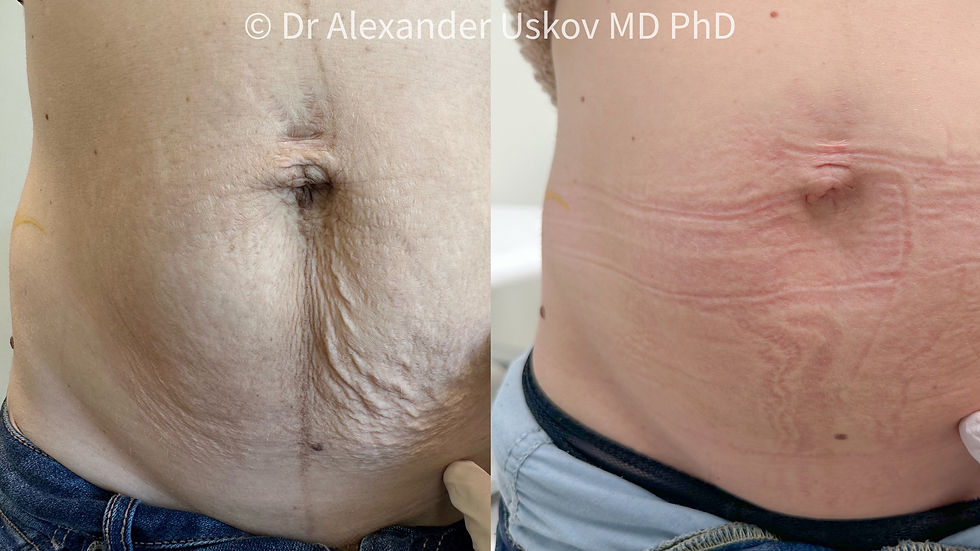
Can stretch marks be treated with a laser during pregnancy?
Cosmetic laser treatments during pregnancy are usually postponed until after the birth.
High-quality safety evidence for cosmetic laser treatment of stretch marks during pregnancy is insufficient. Skin reactivity, pigmentation and healing also change during pregnancy; lack of direct exposure of the fetus alone does not establish procedural safety.
Therefore, in the absence of a medical necessity, it is advisable to postpone laser, IPL, radiofrequency and microneedling treatments until after childbirth. Reviews of the safety of cosmetic procedures also recommend avoiding cosmetic lasers during pregnancy due to a lack of reliable data.
What should you do if you’ve already got stretch marks?
There’s no need to panic. Fresh stretch marks usually fade gradually after childbirth and become less noticeable.
However, they rarely disappear completely, as they represent a structural change in the dermis.
In the early stages, stretch marks are red or purple. Later, they progress to a white, atrophic stage. The choice of treatment depends on the stage.
Fresh red stretch marks
Colour and stage influence treatment selection: the vascular component of early red stretch marks may be a separate treatment target. This does not guarantee a better result or make immediate intervention necessary.
Depending on skin colour, location and the condition of the stretch marks, the doctor may consider:
vascular lasers
non-ablative fractional lasers
certain combined techniques
after the end of pregnancy — topical tretinoin, provided there are no contraindications
Mature white stretch marks
In the case of white atrophic stretch marks, treatment is primarily aimed at dermal remodelling.
The following may be used:
fractional ablative lasers, including CO₂ or Er
non-ablative fractional lasers
microneedling therapy
microneedle radiofrequency lifting
combined treatment protocols
Systematic reviews show that microneedling and laser treatments can improve the appearance and visibility of stretch marks, but the quality of the studies varies, and complete removal should not be expected.
When is the best time to start treatment after giving birth?
There is no single mandatory timeframe that applies to all patients.
When planning treatment, the following factors must be taken into account:
recovery following childbirth
the completion of major changes in body weight
the condition of the abdominal skin
the presence of diastasis
method of delivery
healing following a caesarean section
breastfeeding
predisposition to pigmentation
skin phototype
age and colour of stretch marks
It is usually recommended to first allow the body time for early postnatal recovery and to assess whether the stretch marks lighten naturally.
Once you have recovered from childbirth, you can discuss the stretch marks with a clinician. It is not always necessary to wait until they become white, but age and redness alone do not determine the treatment date or guarantee a better outcome.
The specific timing for starting treatment is determined on an individual basis.
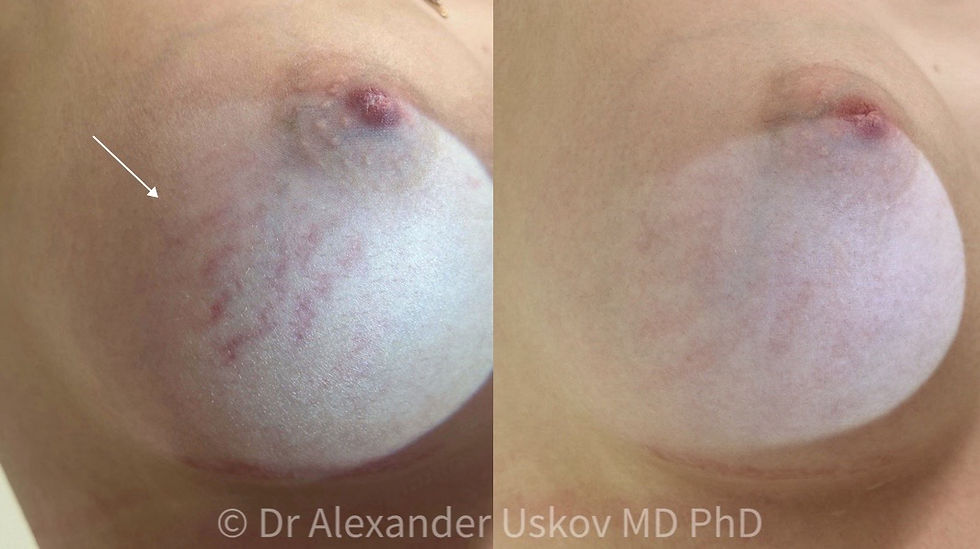
Can stretch marks be treated whilst breastfeeding?
Procedures during breastfeeding require individual assessment of the method, anaesthesia, treatment area and general health. A device's local action alone does not establish the safety of every procedure.
Particular caution should be exercised with regard to procedures on the breasts.
Topical tretinoin is scarcely absorbed through the skin; however, there are insufficient direct studies on its use whilst breastfeeding. Its use must be discussed with a doctor; it should not be applied to the breasts, and contact between the treated skin and the baby must be avoided.
What results can be expected from the treatment?
Modern treatments can effectively reduce the redness of fresh stretch marks, improve skin firmness and texture, reduce the width and depth of the marks, make the transition between the stretch mark and the surrounding skin less noticeable and improve the overall appearance of the affected area
However, it is usually not possible to completely remove stretch marks and restore the skin to a condition identical to that before pregnancy.
The outcome is influenced by:
how long the stretch marks have been present
their colour and depth
skin phototype
location
the equipment selected
the parameters of the procedure
the doctor’s experience
the number of sessions
the skin’s individual capacity for remodelling
A course of treatments is usually required, and the final result is not immediately apparent, as collagen synthesis and remodelling continue for several months.
Key points you should remember
No cream or oil can guarantee the prevention of stretch marks during pregnancy.
The most significant risk factors are genetic predisposition, young age, a history of stretch marks, rapid weight gain and significant stretching of the skin.
A moisturising cream is helpful for reducing dryness, itching and tightness, but should not be marketed to patients as a guaranteed prevention of stretch marks.
Retinoids, including retinol and tretinoin, must not be used during pregnancy.
You should not restrict your diet or attempt to lose weight in order to prevent stretch marks. Weight gain should be in line with your obstetrician’s medical advice.
Cosmetic laser and device-based treatments are best postponed until after the birth.
Early red and mature white stretch marks may need different approaches. Their stage influences method selection, but does not guarantee a greater improvement.
Modern treatments can significantly reduce the visibility of stretch marks, but do not guarantee their complete disappearance.
Dr Uskov’s advice
During pregnancy, I don't recommend looking for a ‘miracle’ cream, but instead following a safe and realistic strategy:
monitor your weight gain in consultation with your obstetrician
use a comfortable, neutral moisturiser every day
avoid retinoids and harsh home treatments
do not damage or irritate the skin
protect exposed areas from the sun
after giving birth, assess the condition of your stretch marks and choose a treatment based on their stage.
The appearance of stretch marks does not mean that a woman has not taken proper care of her skin. In many cases, genetics, hormonal changes and the individual properties of connective tissue play a major role.
Dr Alexander Uskov, MD, PhD
Founder and Medical Director of Dr USKOV Kliinik


